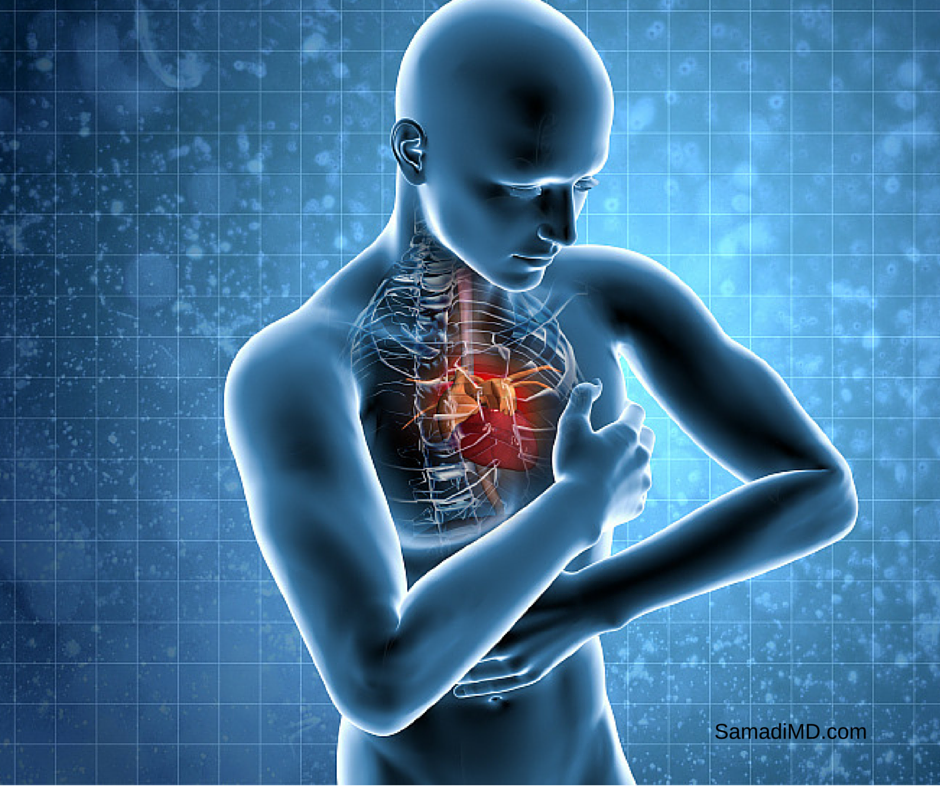
Heart disease includes coronary artery disease, arrhythmia, cardiomyopathy, and heart failure. It occurs when the arteries become clogged. This happens where there is a buildup of plaque that narrows your heart's arteries, making it harder for blood to pass through. Most people don't even know they have heart disease until they have a heart attack. A common warning sign is frequent chest pain called angina.
What does a heart attack feel like?
- Weakness, anxiety, or shortness of breath
- Pain or pressure in the chest
- Nausea, indigestion, or heartburn
- Fast or irregular heartbeats
- Discomfort spreading to the back, jaw, throat, or arm
Heart disease key statistics
· Heart disease is the number one cause of death in the United States.
· In the United States, someone has a heart attack every 34 seconds. Every 60 seconds, someone in the United States dies from a heart disease-related event.
· About 720,000 people in the U.S. suffer heart attacks each year. Of these, 515,000 are a first heart attack and 205,000 happen in people who have already had a heart attack.
· It is the leading cause of death for people of most racial/ethnic groups in the United States, including African Americans, Hispanics and Whites. For Asian Americans or Pacific Islanders and American Indians or Alaska Natives, heart disease is second only to cancer.
· Coronary heart disease is the most common type of heart disease, killing nearly 380,000 people annually.