Low PSA levels linked to increased risk for cancer death

Low PSA levels linked to increased risk for cancer death

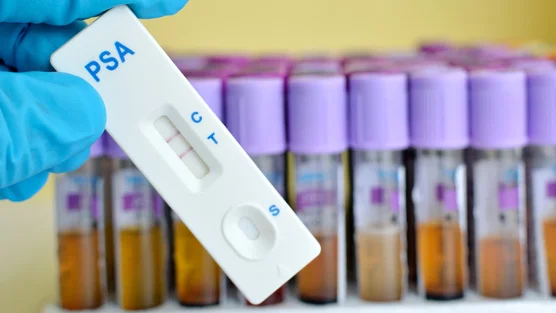
A new study suggests that patients with prostate cancer who have low prostate antigen, or PSA, levels have a higher risk for cancer-specific death compared with patients whose PSA levels are high. A low PSA level was considered less than or equal to 2.5 ng/mL or 2.6 to 4 ng/m, while a high PSA level was considered 10.1 to 20 ng/mL The study was published online in the journal Cancer.

Read More


Sex: Beneficial for prostate health

Sex: Beneficial for prostate health

Sex is beneficial for prostate health. It is also beneficial for many other health reasons. In regards to prostate health, sex may decrease your risk for prostate cancer. A previous study showed that men who ejaculated at least 21 times a month were less likely to develop prostate cancer. This doesn’t mean you need to have a sex partner – whether it be sexual intercourse, nocturnal emission, or masturbation, all are beneficial.

Read More

Why two nutrients may assist in preventing prostate cancer

Why two nutrients may assist in preventing prostate cancer

The month of September is designated as National Prostate Cancer Awareness Month to help bring attention to a common yet highly curable disease among men. Many different factors can play a role in reducing the risk of developing this disease but a couple of nutrients stand out in the crowd that may possibly help make this more of a reality – the mineral zinc and the phytochemical lycopene.

Read More

Prostate cancer death risk associated with stress

Prostate cancer death risk associated with stress

A new study suggests that having high levels of stress may increase a man’s risk of prostate cancer death. This is not just men who have advanced prostate cancer, but men with localized prostate cancer, which means the cancer is still confined to the prostate gland. The study was published online in the Scandinavian Journal of Urology.

Read More

Treatment for BPH

Treatment for BPH

Benign prostatic hyperplasia (BPH) is a condition that occurs in men usually over 50 years old and is characterized by an enlarged prostate. As men age, it is natural for the prostate to become enlarge. BPH is a noncancerous growth of the cells within the prostate gland. By age 60, more than half of men have BPH. By age 85, about 90 percent of men have BPH, but only about 30 percent will have symptoms.

Read More

What is percent-free PSA?

What is percent-free PSA?

PSA stands for prostate specific antigen. It is a protein in the blood and is measured by taking a person’s blood to identify the amount of PSA that is present within the blood. PSA is important to measure once a man gets older because if the level is abnormal, or elevated, it may indicate a number of prostate conditions, including prostate cancer.  

Read More

What is the Gleason score for prostate cancer?

What is the Gleason score for prostate cancer?

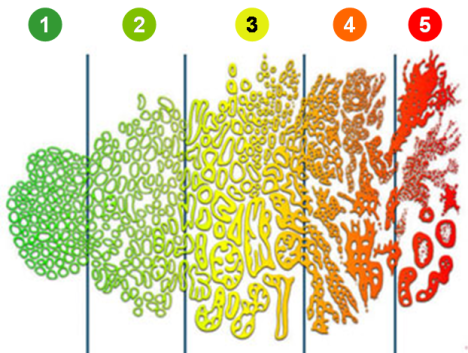
The Gleason score is a system using to grade prostate cancer tissue which is dependent upon how it looks when analyzed under a microscope. The Gleason score ranges from two to ten and is an indicator of how likely it is that the cancer will spread. It also provides the doctor with the necessary information needed to select the most optimal treatment plan for the patient. Similar to staging prostate cancer, grade are given to each prostate cancer case to determine the severity of the disease. A urologist will assign a grade to the prostate cancer after the patient has undergone a prostate biopsy. The tissue samples are sent to a laboratory to be analyzed by a pathologist.

Read More

What does an elevated PSA mean?

What does an elevated PSA mean?

An elevated PSA can mean a number of underlying conditions. Many people often associate an elevated PSA with prostate cancer, but that is not always the case. While prostate cancer is very common among older men, there are other conditions that may be affecting the prostate that could be the reason for developing an elevated PSA.

Read More

Staging system for prostate cancer

Staging system for prostate cancer

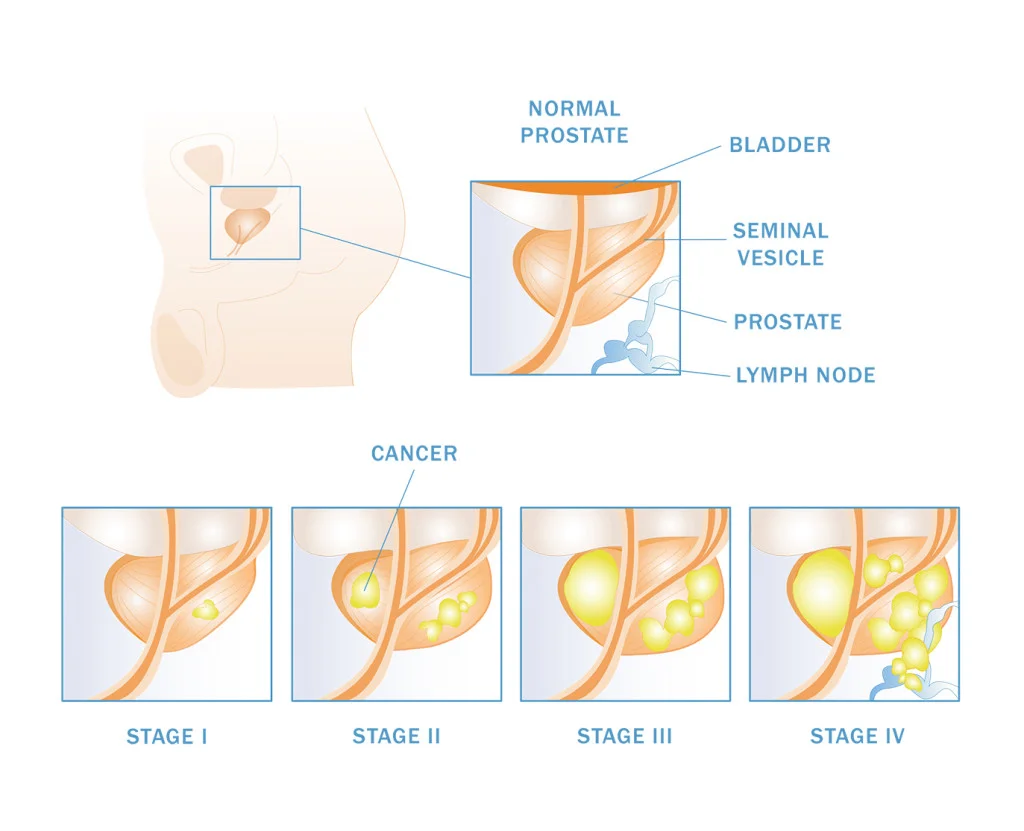
In order to stage prostate cancer, a staging system is used called the TNM system. The TNM system is used to describe how far the cancer has spread within the prostate gland or body. The TNM system is based on a few key pieces of information including the T category, which is the extent of the primary tumor, the N category, which determines whether the cancer has spread to nearby lymph nodes, the M category, which is determines the absence or presence of distant metastasis, as well as the PSA level and the Gleason score. 

Read More

External Beam Radiation Therapy for prostate cancer

External Beam Radiation Therapy for prostate cancer

External Beam Radiation Therapy is a type of treatment that can be used for prostate cancer. This type of treatment works by targeting the prostate gland with beams of radiation. After your prostate has been mapped and your body has been set into place by a fitted mold, shaped beams of radiation are directed at the prostate from several directions which kills the cancer cells. There are two types of radiation that your doctor may use. These include either three dimensional conformal radiotherapy (3DCRT) or intensity-modulated radiotherapy (IMRT).

Read More

Cryosurgery for Prostate Cancer

Cryosurgery for Prostate Cancer

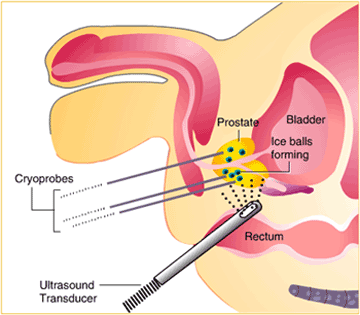
Cryosurgery for prostate cancer is also known as cryotherapy. It is a minimally invasive surgical procedure that uses extremely cold gas to freeze and destroy the prostate. With cryosurgery for prostate cancer, transrectal ultrasound is used to map and guide needles through the area between the anus and scrotum so that the cold gases can be directed to the prostate.

Read More

Seed implants for prostate cancer

Seed implants for prostate cancer

Seed implants for treating prostate cancer are also known as brachytherapy, or internal radiation therapy. It is a type of radiation treatment that uses radioactive pellets or seeds that are inserted directly into the prostate gland to kill the cancer cells. Short-term hormonal therapy may also be used in combination with brachytherapy to help reduce the size of the tumor.  

Read More