Understanding the pathology report of a prostate biopsy
/
Many doctors will want to conduct a prostate specific antigen or PSA test on men once past the age of 40.
Read MoreMany doctors will want to conduct a prostate specific antigen or PSA test on men once past the age of 40.
Read MoreBased upon your risk assessment determined by your urologist, your procedure may vary in the core number of tissue specimens obtained and may include MRI imaging.
This news is from a prospective validation study showing that it has the potential to reduce the number of unnecessary prostate biopsies substantially.
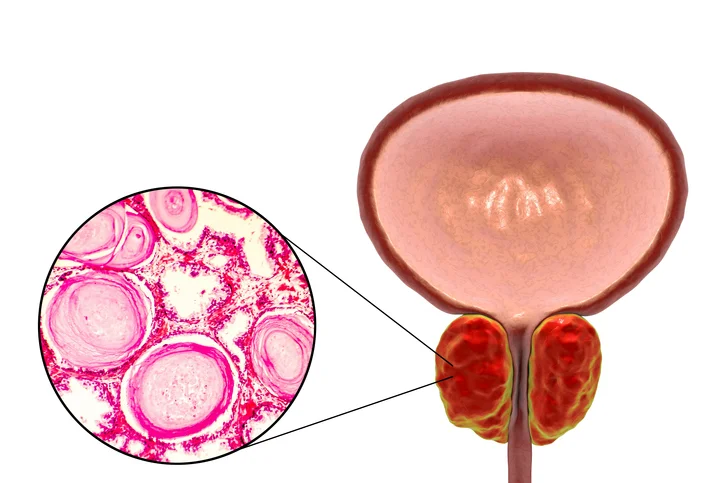
Prostatic intraepithelial neoplasia or PIN is a condition in which cells from the prostate begin to look and behave abnormally. Each year around 16% of men who undergo a prostate biopsy will find out they have PIN which is essentially a precancerous condition and therefore is not prostate cancer.
Read MoreAlong with receiving a diagnosis of prostate cancer, comes new medical terminology that is likely unfamiliar to most men. One of the terms a man will hear is what is called a Gleason score. In 1966, a grading system for prostate cancer was developed by Dr. Donald Gleason. The Gleason score, still bearing his name today, is a system used to grade the aggressiveness of prostate cancer tissue.
Read MoreThe new procedure makes use of a breakthrough in nanotechnology in the form of a postage stamp-sized chip containing wires 1,000 times thinner than human hairs.
Read MoreTo get as accurate of a reading as possible, several cores from different areas of the prostate will be sampled.
Read MoreThe happy fact is that most prostate tumors are slow growing and not fatal.
Read MoreNew imaging technologies involving MRI are emerging that are helping urologists more accurately target prostate cancer lesions in men diagnosed with prostate cancer. Over the past couple of years MRIs have become more refined, allowing for more accurate diagnoses of malignant tumors. Now, MRI is able to be fused with other new devices with real-time imaging produced by ultrasound. As a result, doctors are able to perform a biopsy with direct guidance of the needle to the suspicious lesion. The procedure is called a fusion biopsy.
Read MoreThe MRI fusion guided prostate biopsy “fuses” MRI scans with real-time ultrasound images of the prostate. This cutting-edge biopsy system allows us here at the Dr. David Samadi Prostate Cancer Center to pinpoint specific tumors within the prostate gland. This information provides the patient with the most optimal treatment plan and best possible outcome in detecting and diagnosing prostate cancer.
Read More“My PSA is elevated, but I keep having negative biopsies. What does this mean?” This is a common question among many men under the care of a urologist. If you are familiar with prostate cancer, you know that having an elevated or rising PSA (prostate-specific antigen) may mean you have prostate cancer.
Read More